STUDY BUDDY
Low-cost offline AI tutor for students
Study Buddy is a low-cost, offline educational device designed to support students in regions with limited internet access, teacher shortages, and low literacy rates. Built on a Raspberry Pi, it runs a localized Gemma 3.4B language model that enables AI tutoring without relying on cloud connectivity.
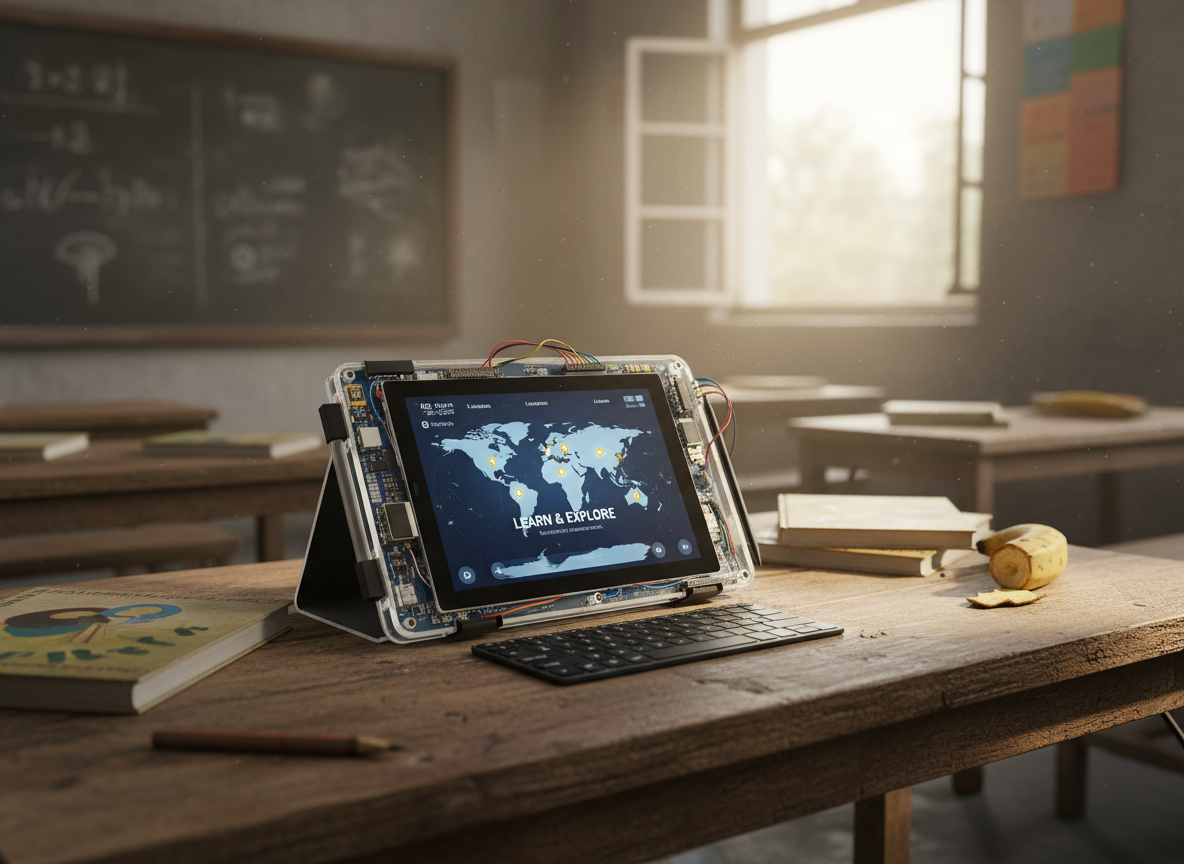
From Prototype to Product
The evolution of Study Buddy from our first prototype to the finalized design.

1st Prototype
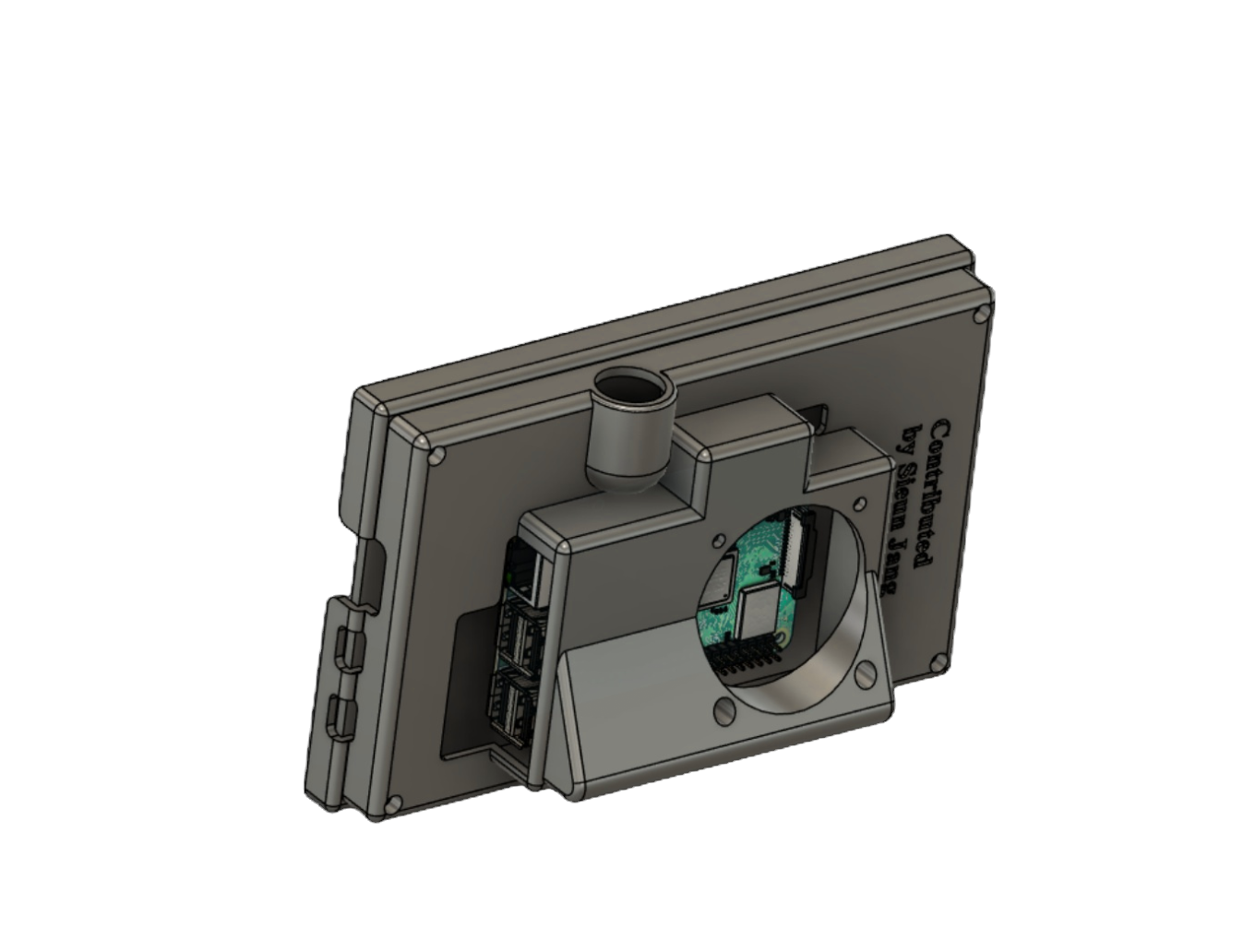
Finalized Design
Delivered to Vision School, Cambodia
In July 2026, six Study Buddy devices were delivered to Vision School in Cambodia for classroom demonstrations and testing with students. The initiative was also presented to representatives of the Korean Embassy in Cambodia and KOICA.
Real Device Photos


How It Works

Study Buddy
Study Buddy is a low-cost, offline educational device designed to support students in regions with limited internet access, teacher shortages, and low literacy rates. Built on a Raspberry Pi, it runs a localized Gemma 3.4B language model that enables AI tutoring without relying on cloud connectivity. The system features a voice-first interface using Speech-to-Text and Text-to-Speech in native languages such as Khmer and Lao, allowing learners to interact through natural conversation even if they cannot read well. With five adaptive difficulty levels, Study Buddy provides personalized learning support and offers a scalable solution for improving education in underserved communities.
How Study Buddy Works
Designed to function effectively in low-resource environments where traditional digital learning is inaccessible.
Raspberry Pi Powered
Built on affordable Raspberry Pi hardware, making it accessible for low-resource environments.
Voice-First Interface
Speech-to-Text and Text-to-Speech in Khmer and Lao, letting learners interact through natural conversation.
Fully Offline
Runs a localized Gemma 3.4B language model — no internet connection required.
Adaptive Learning
Five difficulty levels providing dynamic pedagogical scaffolding based on learner proficiency.
The Problem We're Solving
Severe educational disparities persist in many low-income regions, where limited access to quality schooling continues to hinder literacy development. In Cambodia, despite improvements in national education, functional illiteracy remains a significant challenge, particularly in rural communities. Many children struggle to develop foundational reading and writing skills due to shortages of trained teachers, overcrowded classrooms, and limited educational resources.
These literacy challenges are further intensified by infrastructural limitations, including unreliable internet access and the scarcity of digital learning tools. Across many low- and middle-income countries, recent global estimates suggest that up to 70% of children experience "learning poverty," meaning they cannot read and understand a simple text by age ten.
To address these challenges, Study Buddy was developed as a low-cost, offline educational device designed to provide personalized, autonomous tutoring in disconnected environments. A core innovation is its seamless integration of Speech-to-Text (STT) and Text-to-Speech (TTS) pipelines supporting native languages such as Khmer and Lao. This "voice-first" interaction model allows learners to bypass traditional literacy barriers, engaging with educational content through natural verbal dialogue.
Furthermore, the system incorporates five adaptive difficulty levels to provide dynamic pedagogical scaffolding based on learner proficiency. By demonstrating the feasibility of deploying multilingual generative AI on low-resource hardware, this work offers a scalable framework for inclusive and equitable education in regions where traditional digital learning infrastructures remain inaccessible.